
Keel Roll Forming Machine Philippines
- Condition
- New
- Supplier
- Roll Forming Machines Philippines
- Country
- Philippines
- Listing ID
- 6696
Request a Quote
To express an interest in this machine please submit the form below.


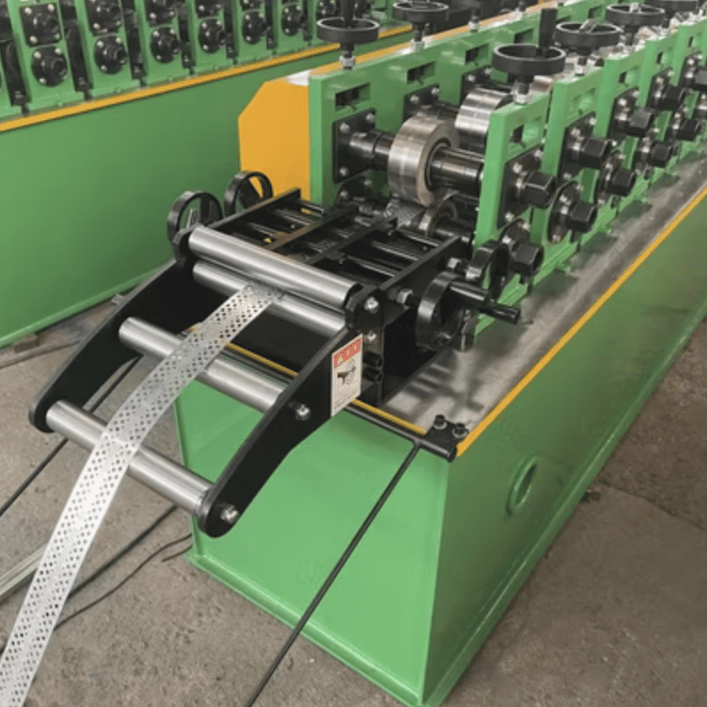
A keel roll forming machine transforms steel coils into precisely formed profiles through a series of rollers. The machine's automation ensures high-speed production while maintaining consistent quality. The profiles produced are typically used in non-load-bearing walls, ceilings, and partitions.
Key Features:
- High Precision: Ensures accuracy in dimensions for perfect fitting.
- Durable Design: Built with heavy-duty materials for long-lasting performance.
- Customizable Profiles: Can produce various sizes and designs based on requirements.
- User-Friendly Interface: Equipped with an advanced PLC control system for easy operation.
- Energy Efficiency: Optimized power usage for cost savings.
Machine Specifications
| Category | Specifications |
|---|---|
| Material | Galvanized steel, stainless steel, aluminum |
| Material Thickness | 0.3mm – 1.2mm |
| Material Width | 50mm – 300mm |
| Roller Material | High-grade Cr12MOV steel with hard chrome plating |
| Number of Stations | 10–20 roller stations |
| Cutting System | Hydraulic cutting with precise die |
| Motor Power | 5kW – 15kW (varies by model) |
| Machine Speed | 20m/min – 40m/min |
| Frame Structure | Welded steel frame for enhanced stability |
| Control System | PLC control with touch screen interface |
| Power Requirements | 380V/50Hz (customizable for other regions) |
| Profile Types | C-stud, U-track, Omega profile, and custom profiles |
| Safety Features | Emergency stop, safety guards, and overload protection |
| Optional Extras | Decoilers, stackers, remote PLC control, and embossing units |
Profile Description
The keel roll forming machine produces profiles with the following characteristics:
- Materials: Galvanized steel or stainless steel to prevent corrosion.
- Sizes: Common sizes include C-studs (50mm, 75mm, 100mm) and U-tracks.
- Thickness: Ranges from 0.3mm to 1.2mm, depending on structural needs.
- Applications: Widely used in drywall partition systems, suspended ceilings, and lightweight structural framing.
Setup and Installation
- Preparation: Place the machine in a leveled position and ensure proper alignment.
- Material Loading: Mount the steel coil onto the decoiler.
- Profile Adjustment: Set the desired profile dimensions through the PLC interface.
- Trial Run: Conduct a test run to ensure accuracy and performance.
- Production Start: Begin mass production with continuous monitoring.
Maintenance Requirements
- Daily Checks: Inspect rollers, guides, and cutting blades for wear and tear.
- Lubrication: Regularly lubricate moving parts to ensure smooth operation.
- Electrical Components: Check wiring and PLC connections for any faults.
- Cleaning: Keep the machine clean to avoid material buildup and corrosion.
- Periodic Overhaul: Conduct a thorough inspection every 6–12 months.
Question and Answer Section
Q1: What profiles can the keel roll forming machine produce?
A: The machine can produce C-studs, U-tracks, Omega profiles, and customized shapes, catering to drywall, ceiling, and partition systems.
Q2: What material thickness is supported by this machine?
A: The machine typically processes material thickness ranging from 0.3mm to 1.2mm.
Q3: Can the machine handle different power supplies?
A: Yes, the machine’s power supply can be customized to suit regional standards, such as 220V, 380V, or 415V.
Q4: Is it possible to customize profile sizes?
A: Absolutely. The machine can be configured to produce a variety of profile sizes as per the user’s requirements.
Q5: How fast can the machine produce profiles?
A: Production speed ranges from 20m/min to 40m/min, depending on the material and profile complexity.
Q6: What optional extras can be added to the machine?
A: Options like stackers, remote PLC control systems, embossing units, and decoilers can enhance functionality.
Q7: What is the typical lead time for delivery?
A: Delivery time depends on customization but usually ranges between 30–60 days.
Q8: How is the machine shipped?
A: The machine is disassembled and securely packed in containers for sea or land transport.